Background: Sidama Regional Information Platform for Nutrition (Sidama-RIPN)
 The Sidama Regional Information Platform for Nutrition (Sidama-RIPN) was established in May 2024 as part of Ethiopia’s broader National Information Platform for Nutrition (NIPN) initiative. Its creation reflects a growing national and regional commitment to strengthening evidence-based nutrition governance and improving decision-making for better health and nutrition outcomes.
Hosted by the Sidama Public Health Institute (SPHI), Sidama-RIPN serves as a regional hub for generating, analyzing, synthesizing, and disseminating high-quality nutrition and multisectoral data. The platform brings together government institutions, academic partners, development organizations, and sectoral bureaus to promote coordinated, data-driven actions addressing malnutrition.
Sidama-RIPN focuses on enhancing the technical capacity of regional experts through training, mentorship, and collaborative research initiatives. It supports the development of evidence briefs, policy questions, monitoring dashboards, and learning products that help decision-makers identify gaps, monitor progress, and prioritize nutrition interventions.
As part of the national NIPN structure, Sidama-RIPN contributes to Ethiopia’s vision of a robust and responsive nutrition information ecosystem, ensuring that accurate, timely, and actionable evidence informs both policy and practice. The platform plays a major role in linking regional realities with national strategies, enabling a more comprehensive and targeted approach to combating malnutrition in the Sidama Region.
Vision
A region where policies and programs are shaped by high-quality evidence, leading to improved nutrition, health, and wellbeing for all communities in Sidama.
Mission
To strengthen evidence-based nutrition governance by generating, synthesizing, and promoting the use of reliable multisectoral data for informed policy decisions and improved nutrition outcomes in the Sidama Region.
Core Objectives
1. Strengthen Nutrition Data Systems
-
-
-
Enhance the availability, quality, and accessibility of multisectoral nutrition data.
-
Promote standardized tools, methodologies, and data management practices across sectors.
-
-
2. Generate and Analyze Evidence
-
-
-
Conduct high-quality analyses, including trend assessments, systematic reviews, policy analyses, and operational research.
-
Produce evidence briefs, analytical reports, and dashboards that support policy formulation and program improvements.
-
-
3. Promote Evidence-Informed Decision-Making
-
-
-
Facilitate policy dialogues, technical review meetings, and multisectoral consultations using synthesized evidence.
-
Support government sectors and partners to integrate evidence into planning, implementation, and monitoring processes.
-
-
4. Strengthen Regional Capacity
-
-
-
Provide training and mentorship on data analysis, research methods, monitoring and evaluation, and evidence translation.
-
Build a community of practice for continuous learning and collaboration on nutrition intelligence.
-
-
5. Foster Multisectoral Collaboration
-
-
-
Coordinate efforts among health, agriculture, education, water, finance, and other relevant sectors to address malnutrition.
-
Ensure that nutrition data and evidence are shared, harmonized, and jointly interpreted.
-
-
Strategic Focus Areas
-
-
-
-
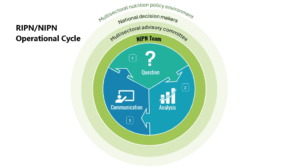
- Question formulation based on government priorities;
- Analysis of data to inform the questions;
- Communication of the findings back to government.
-
-
-